Which of the Following Is Not a Product of Reading Books at an Early Age?
Back to Manufactures
The 5 Components of Reading
Learning to read is 1 of the most important skills children tin can learn. When your child takes their first steps in their learning to read journey, information technology'southward important to keep in heed the five essential components of reading that every child needs in order to grow into a confident and fluent reader.
There are many fun, play-based activities y'all can do at abode to build your child's skills in these v core areas of reading.
Reading Eggs is designed by experts to cover all five components of reading instruction for children anile 2–thirteen. If you don't take an business relationship nonetheless, register online here for a costless trial.
Here are the 5 fundamental aspects of reading for every child:
one. Phonics

Phonics is the process of mapping the sounds in words to written letters. This is one of the earliest reading skills children should develop, considering it introduces them to the link between messages and sounds, known as the alphabetic principle.
A lack of phonics instruction in early on childhood tin can lead to reading difficulties farther downward the track. It'due south of import that children can grasp the concept that printed text represents the sounds of spoken words. There are many phonics activities that you can practice with your child at abode, which volition help your child to develop early phonics skills, although it's important to remember that these activities should always be complemented with regular reading.
2. Phonemic awareness

Children develop phonemic awareness by learning about sounds (phonemes), syllables and words.
Every word in the English linguistic communication is made up of a combination of private units of audio, known as phonemes. For instance, the give-and-take 'crab' is made up of four private units of audio; c/r/a/b. Phonemic awareness is the ability to hear, identify and manipulate these individual units of sound. It is one of the well-nigh fundamental skills children need to acquire in order to learn how to read. By playing word games, engaging in language play, rhyming, and simply listening to a parent read to them, your child can develop phonemic awareness from an early age. Why not consummate the first few lessons in Reading Eggs with your child at present to start building key skills in phonemic awareness?
3. Vocabulary
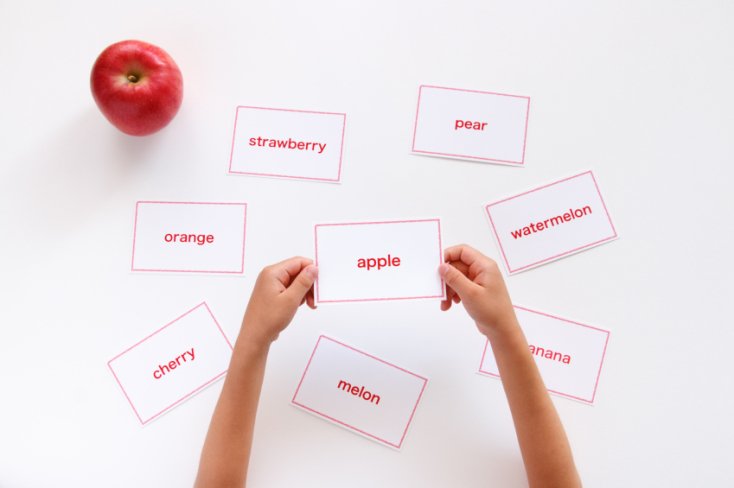
Having an ever-increasing vocabulary is a primal part of bookish and reading success. The more words we know, the ameliorate we go at reading and understanding the texts that we read.
Every child approaches reading with varying abilities. The larger a child'south speaking and listening vocabulary, the more words they will exist able to add to their reading and writing vocabularies with relative ease. Reading a wide variety of books is one of the best means for a child to abound their vocabulary. Some of the most primal words that a kid will acquire when starting to read are sight words. These include high frequency sight words such equally 'on', 'I', 'the', 'and', 'is', 'an' and 'exist'. The beginning 100 sight words make upward more than l per cent of most texts for early readers, and are therefore extremely beneficial for your child to larn early on on in their reading journeying.
4. Fluency

There is a range of different skills that build reading fluency in young children. These include strong phonic decoding skills, an expanding bank of high frequency words recognized at sight, and the amount of time that children spend reading books at an advisable level. The more children read, the amend they are at agreement and reading with speed and accuracy.
Fluency enables readers to rapidly span the gap betwixt recognizing a give-and-take and agreement its pregnant. Since fluent readers no longer need to concentrate on decoding the words on a page, they tin can enjoy the freedom of focusing on the *meaning* conveyed by words and sentences. Fluency is something that comes equally a child develops their phonemic awareness, phonics skills and vocabulary. Regular reading practise is essential to developing reading fluency. It's also helpful to notation that past reading aloud regularly to your child, you can provide them with a vocal model to help them sympathise what fluent reading sounds similar.
You can choose from over 3000 children'southward books in the Reading Eggspress Library, which are all sorted by reading historic period and Lexile level. Log in now to start reading or annals for a complimentary trial here.
5. Reading comprehension

Great readers are deeply immersed in the stories they read. They visualize the characters, they hear the dialogue in their heads, and they imagine details beyond the borders of the page. Great readers think about what is happening in a story and share the emotional journey of the characters.
In nonfiction books, great readers gain new data, increase their vocabulary, and link what they read with other sources of information in club to deepen their level of agreement of new concepts and topics.
These are all indicators that your kid has a total and rich comprehension of the texts they read. It is a complex skill that requires fourth dimension and practice to develop fully, but inevitably reaps nifty rewards. It's no undercover that reading for meaning is the ultimate goal of learning to read. Comprehension is a skill that volition non but affect a child's future reading ability, but also their academic power throughout school and beyond. Encouraging your child to talk virtually what they read is a bully way to both monitor how much they understand and ameliorate their comprehension skills. Read how you can build your child's reading comprehension skills here.
Reading Eggs is the multi-award winning online reading program designed by experts to make learning to read easy and fun. It covers all five essential components of reading instruction for children aged 2–13. Start your gratuitous trial here today.


Source: https://readingeggs.com/articles/2016/06/10/five-components-of-reading/
Belum ada Komentar untuk "Which of the Following Is Not a Product of Reading Books at an Early Age?"
Posting Komentar